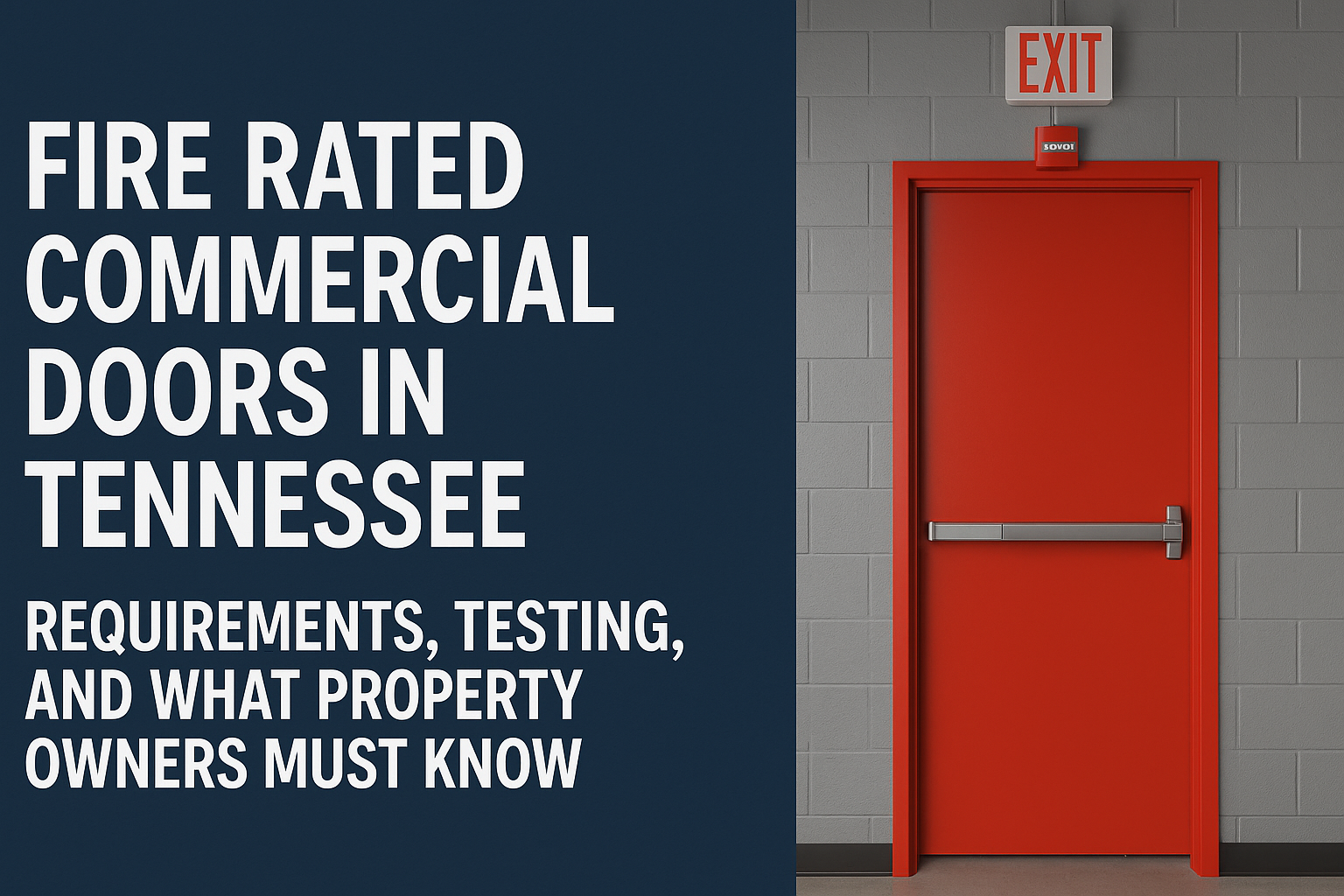
Fire rated doors play a critical role in protecting buildings and saving lives. They slow the spread of smoke and flames, protect escape routes, and help buildings remain compliant with Tennessee safety regulations. Many property owners are surprised by how specific the requirements are and how often fire doors fail inspections due to simple overlooked issues.
This guide explains what commercial property managers in Middle Tennessee need to know about fire rated doors, inspections, and long term maintenance.
What Makes a Door Fire Rated
A fire rated door is part of a tested assembly designed to withstand fire for a specific period of time. The stability of the entire system is what matters, including:
• Door slab
• Frame
• Hinges
• Locks and panic hardware
• Seals and intumescent strips
• Door closer
Fire rated doors must be tested and certified through recognized laboratories such as UL or Intertek. Labels must remain intact to verify compliance.
Fire Rating Levels and What They Mean
Common fire ratings include:
•
20 minute for limited protection areas
•
45 minute for corridors and intermediate spaces
•
60 and 90 minute for stairwells, mechanical rooms, and high risk areas
•
180 minute for specialized industrial environments
Your building’s designated fire zones determine which level is required.
Tennessee Requirements for Fire Doors
Commercial buildings in Tennessee must follow the International Fire Code and NFPA 80 standards.
This includes:
• Proper labeling that is easy to read
• Approved fire-rated hardware
• Correct installation by a qualified professional
• No field modifications without approval
• A fully operational self-closing, self-latching function
A surprising number of fire doors fail due to small issues that violate NFPA 80.
Annual Fire Door Inspections
Fire doors must be inspected every year by someone trained and certified in fire door safety.
Inspections typically check for:
• Damaged frames or missing screws
• Non functioning door closers
• Gaps that exceed allowed measurements
• Missing or painted over labels
• Incorrect hinges or hardware
• Propped open or disabled closures
• Broken latching mechanisms
Correcting these issues quickly ensures compliance and keeps tenants safe.
Common Causes of Fire Door Inspection Failure
Most failed inspections happen due to routine wear and tear or unapproved modifications.
These include:
• Adjusted or removed closers
• Hardware replaced with non rated parts
• Gaps caused by building settling
• Unauthorized drilling or alterations
• Damage from carts or equipment
Even a minor gap can prevent a door from performing correctly during a fire.
Replacement vs. Repair
Some issues can be corrected easily, such as closer adjustments or new hardware. Others may require a full door or frame replacement to restore the fire rating.
Property owners should consider replacement when:
• The label is missing or unreadable
• The door is significantly warped
• The frame is damaged beyond repair
• Field modifications void the fire rating
A professional evaluation provides clarity on which option is best.
Protect Your Building with Nashville Door
Nashville Door offers installation, inspection support, hardware replacement, and
fire rated door services for commercial buildings across Middle Tennessee. We help property managers stay compliant while ensuring that fire doors perform exactly as they should during an emergency.