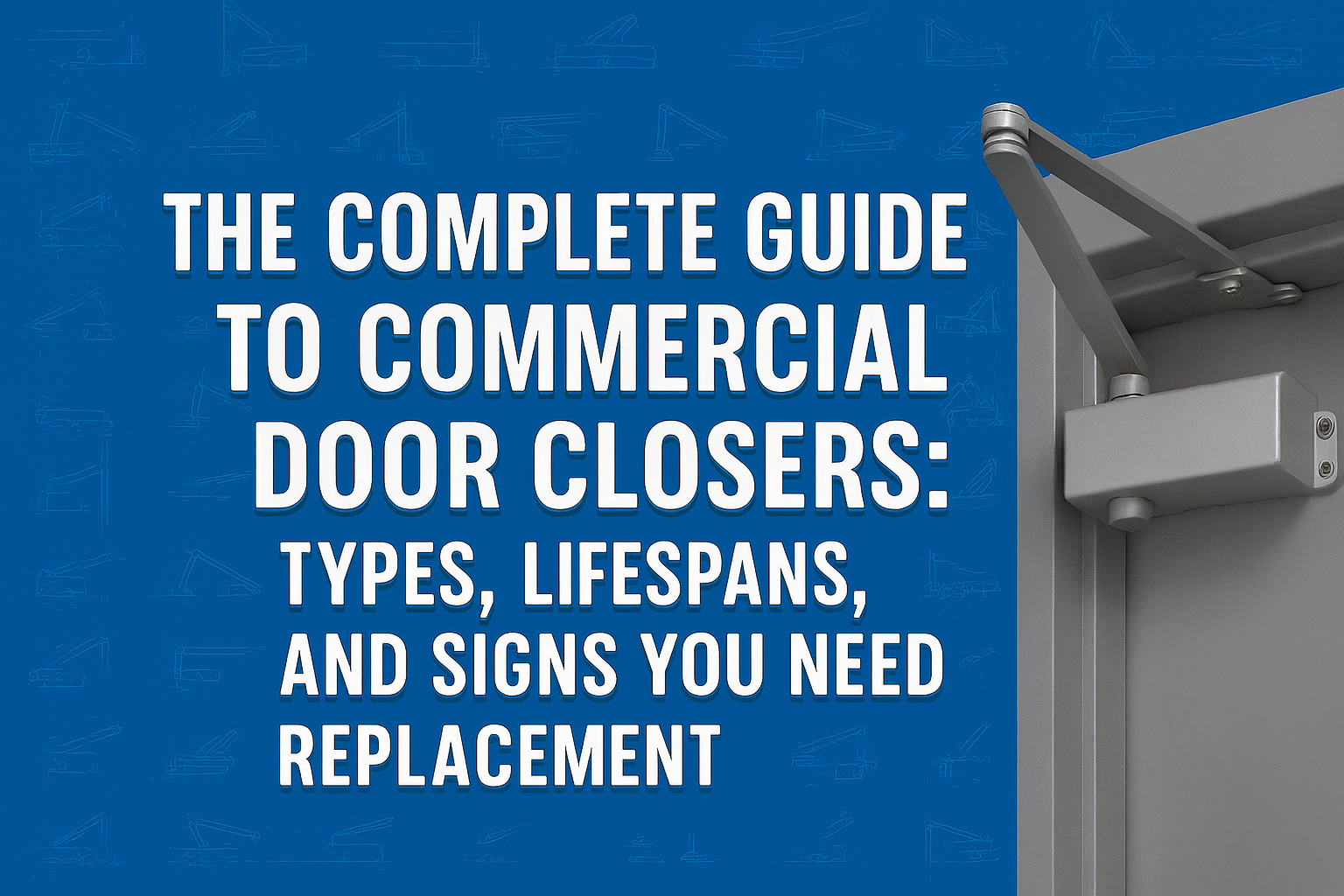
Door closers are one of the most important yet overlooked pieces of commercial door hardware. They
control the speed and force of the closing cycle, protect door frames, support ADA accessibility, and improve building safety. When a closer begins to fail, it can affect everything from energy efficiency to security.
This guide explains the main types of commercial door closers, how long they last, and the warning signs that indicate it is time for repair or replacement.
Why Door Closers Matter
A properly installed closer ensures:
• Smooth opening and closing
• Controlled closing speed
• Safe operation for visitors
• Protection against slamming
• Reduced wear on the door and frame
• ADA compliant access
• Secure latching
In high traffic Nashville buildings, a failing closer can quickly create safety risks and increase maintenance costs.
Types of Commercial Door Closers
Different buildings require different closer styles depending on door weight, usage, and design goals.
Surface Mounted Closers
These are the most common closers used in commercial buildings. They are visible, durable, and easy to maintain.
Ideal for:
• Offices
• Schools
• Retail spaces
• Industrial properties
Concealed Closers
Installed inside the header or door, these closers offer a clean, modern appearance without visible hardware.
Ideal for:
• Glass storefront doors
• Architectural entrances
• Buildings with strict design requirements
Heavy Duty Closers
Built for constant use, heavy duty closers withstand thousands of cycles per day.
Ideal for:
• Hospitals
• Hotels
• High traffic office towers
• Airports
ADA Compliant Closers
Designed for low opening force and smooth, consistent motion.
Ideal for:
• Medical facilities
• Schools
• Senior living communities
• Any building serving the public
Extra Features to Consider
•
Backcheck to prevent damage from wind or forced opening
•
Delayed action for slow, controlled closing
•
Hold open functions for areas where equipment carts pass through
A specialist can help match the right closer to the specific needs of
each entrance.
Expected Lifespan of Commercial Door Closers
Most closers last between
7 and 15 years depending on usage. In Middle Tennessee, humidity can shorten the lifespan of lower quality closers by affecting internal seals and hydraulic fluid.
Lifespan is reduced when:
• The door is misaligned
• People pull or force the door repeatedly
• The closer is not adjusted during seasonal weather changes
• Incorrect weight rating is used
Routine adjustments can extend the life of a closer and prevent premature failure.
Signs a Door Closer Needs Replacement
Property managers should watch for:
• Oil leaks around the closer arm or body
• Slamming or uncontrolled closing
• Door that will not latch fully
• Excessive force required to open the door
• Grinding or scraping sounds
• Door drifting open or closing too slowly
• Loose arms or mounting screws
Any oil leak means the internal seal has failed, and replacement is the only solution.
Repair vs. Replacement
Some issues, such as misalignment or seasonal adjustment, can be corrected. Others, such as hydraulic failure, require a new closer.
Replacement is recommended when:
• Oil is leaking
• Hardware is damaged beyond repair
• The door no longer closes within ADA guidelines
• The closer is over a decade old and causing recurring problems
A professional evaluation can determine the most cost effective solution.
Professional Door Closer Services for Nashville Buildings
Nashville Door provides installation, repair, and replacement of commercial door closers for properties throughout Middle Tennessee. With extensive experience across hospitals, office buildings, retail centers, and industrial facilities, our team ensures every door operates safely and reliably.